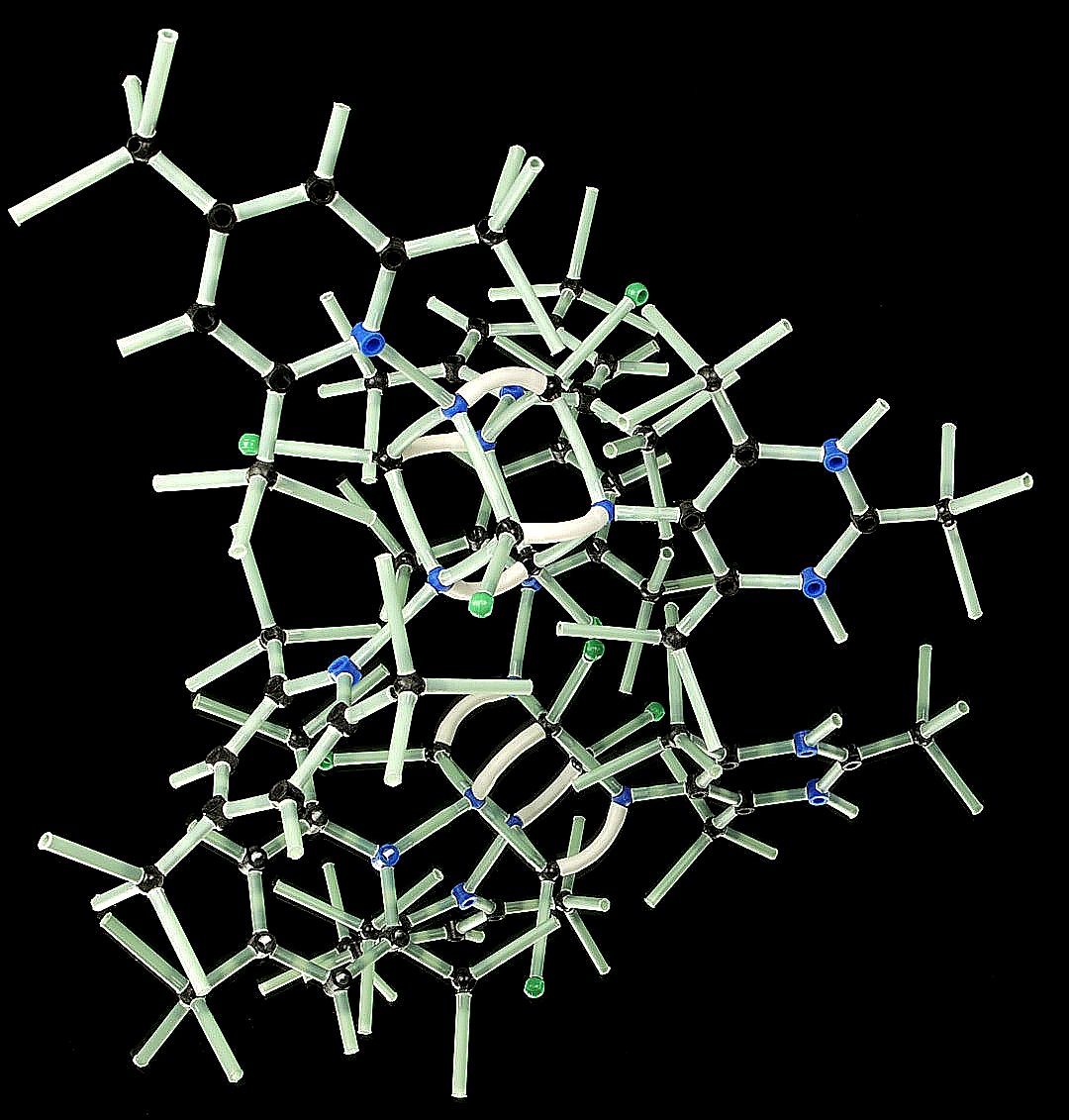
Imagine a material so porous that a single gram could have the surface area of an entire football field. It sounds like science fiction, but welcome to the world of Metal-Organic Frameworks (MOFs). These crystalline solids are essentially molecular 'LEGO sets'—combining metal ions with organic molecules to create highly tunable, cage-like structures that can trap almost anything we throw at them.
A Swiss Army Knife for the Planet
Because we can design these pores at the atomic level, MOFs are becoming the secret weapon in the fight against climate change. Researchers are utilizing them for high-efficiency carbon capture, literally scrubbing greenhouse gases from the air. But the utility doesn't stop at pollution. MOFs are being positioned as a potential solution to the 'hydrogen problem,' offering a way to store hydrogen fuel for vehicles more safely and densely than current methods allow.

Beyond Gas: Medicine and Energy
While gas storage gets the headlines, MOFs are infiltrating other tech sectors. In medicine, they are being developed as nanosized drug carriers, delivering medication with pinpoint precision. In the energy sector, their massive surface areas and active sites make them ideal for electrochemical energy storage and as catalytic nanoreactors, potentially supercharging the next generation of batteries and fuel cells.
The AI Frontier
We are now entering a new era of discovery. Nobel laureate Omar Yaghi is currently bridging the gap between chemistry and artificial intelligence to accelerate the discovery of new MOFs. By using AI to predict which molecular combinations will yield the most stable and effective frameworks, we are moving from accidental discovery to intentional design.
Whether it's cleaning our atmosphere or powering our cars, MOFs are proving that sometimes, the smallest structures can solve the biggest problems.
Sources
Media